History of the Web
The History of the Web track highlights how key historical decisions, institutional incentives, and socio-technical shifts have shaped the Web’s evolution, and how those choices continue to influence the systems we build and rely on today. This year’s program traces a connected trajectory from early information retrieval and ranking, through the rise of user experience, engagement, and platform dynamics, to the Semantic Web’s vision of machine-understandable data and knowledge graphs. It then brings that historical arc into direct conversation with the current wave of large language models and agentic AI, showing how contemporary AI capabilities are deeply entangled with the Web as both infrastructure and archive: a source of training data, a medium for evaluation, and a space where social impact is felt. Across talks and the panel, the program emphasizes recurring ideas and persistent tensions, such as relevance versus reliability, openness versus governance, scale versus accountability, and shows how historical perspective can sharpen our understanding of what is genuinely new, what is cyclical, and what remains unresolved. Ultimately, the track positions history as an analytical lens for guiding more responsible, informed, and durable choices in future Web research and innovation.
Program
Invited Keynote Talks

Mounia Lalmas
Abstract
The early web was centered on documents, hyperlinks, and retrieval, emphasizing efficient access to relevant information. Over time, as the web expanded in scale and scope, its focus shifted toward users and their experiences, bringing attention, engagement, and satisfaction to the forefront. These changes marked a fundamental transformation in how the web is built and evaluated. This talk offers a historical perspective on how the web’s goals and success metrics evolved in response to content abundance, changing patterns of use, and rising user expectations. It explores how classical notions of relevance broadened to include intent, context, satisfaction, and trust, and how these evolving priorities shaped a wide range of online experiences. It concludes by reflecting on what this trajectory reveals about today’s attention-driven web and the emerging role of AI in shaping online experiences.
Bio
Mounia Lalmas is Senior Director of Research at Spotify, where she leads Tech Research in Personalisation, and is a researcher in information retrieval, recommender systems, user engagement, and evaluation. Her work spans the evolution of the web from early document retrieval and search to large-scale personalized platforms. She previously held senior roles in both academia and industry, including Director of Research at Yahoo and Professor of Information Retrieval at Queen Mary University of London and the University of Glasgow. Mounia is an Honorary Professor at University College London and a Distinguished Research Fellow at the University of Amsterdam. She has been an active member of the web, search, and recommender systems communities for many years, co-chairing conferences such as SIGIR, WWW, WSDM, and CIKM, and authoring over 260 publications. Her recent work explores how generative AI is influencing large-scale retrieval, recommendation, and online experiences.
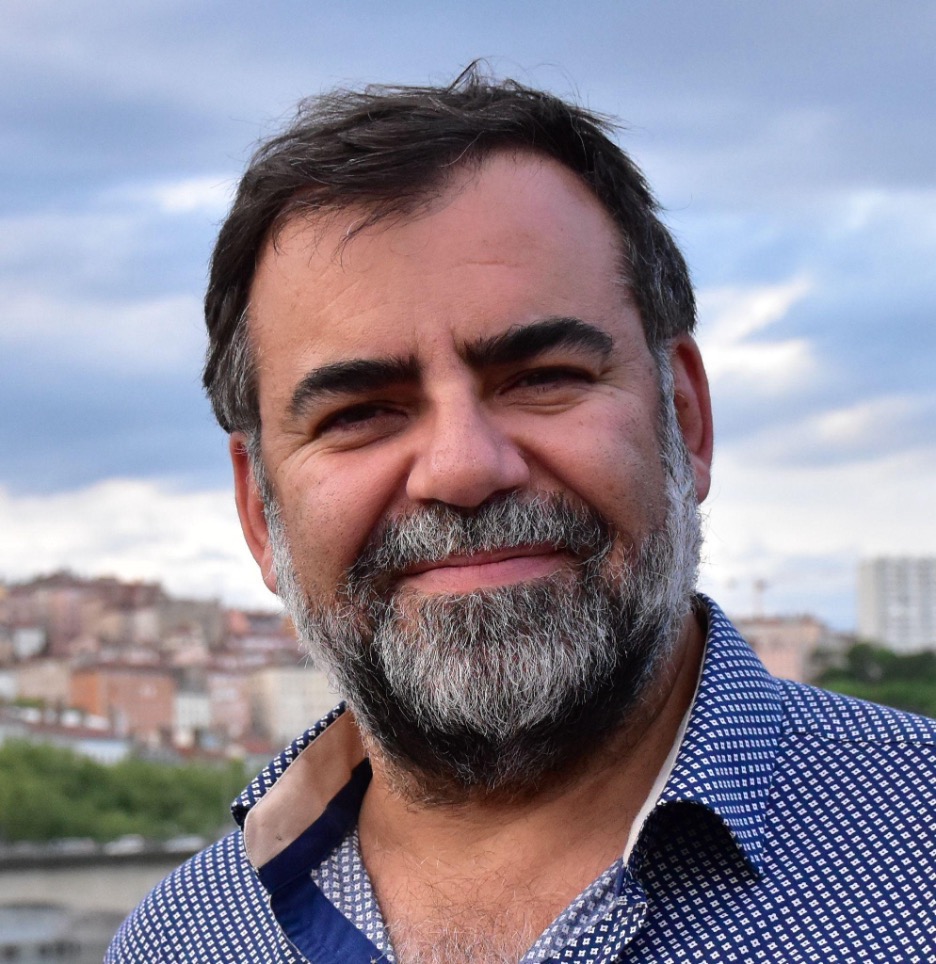
Ricardo Baeza-Yates
WASP Professor at KTH Royal Institute of Technology, Stockholm, Sweden
Abstract
We cover the evolution of web search from lexical and semantic search to the generative AI-powered chatbots common today. For that we need to deep dive into the technical mechanics of vectors, neural IR, and RAG, retrieval augmented generation. To understand the impact of these new tools we need to look at bigger philosophical AI questions: What are we losing when we let machines “guess” for us? Are we widening the digital divide? Are we getting a little too lazy? And we will loss cognitive skills?
Bio
Ricardo Baeza-Yates is a part-time WASP Professor at KTH, the Swedish Institute of Technology. He is also a part-time Professor at Universitat Pompeu Fabra in Barcelona and at Universidad de Chile in Santiago. From 2021 and until early 2025 he was the Director of Research at the Institute for Experiential AI of Northeastern University. Before, he was the CTO of NTENT, a semantic search technology company based in California and prior to these roles, he was VP of Research at Yahoo Labs, based in Barcelona, Spain, and later in Sunnyvale, California, from 2006 to 2016. He is co-author of the best-seller Modern Information Retrieval textbook published by Addison-Wesley in 1999 and 2011 (2nd ed), which won the ASIST 2012 Book of the Year award. From 2002 to 2004 he was elected to the Board of Governors of the IEEE Computer Society and between 2012 and 2016 was elected to the ACM Council. Since 2010 he has been a founding member of the Chilean Academy of Engineering. In 2009 he was elevated to ACM Fellow and in 2011 to IEEE Fellow. He obtained the Spanish National Research Award Ángela Ruiz Robles for applied research and technology transfer given by the Scientific Computing Societies of Spain and the BBVA Foundation in 2018 and the Chilean National Award on Applied and Technological Sciences in 2024, among other distinctions. He obtained a Ph.D. in CS from the University of Waterloo, Canada, and his areas of expertise are responsible AI, web search and data mining, information retrieval, data science and algorithms in general.